
A plain-English guide to pin tumbler, deadbolt grades, mortise locks, padlocks, and smart locks — with a clear recommendation for residential front doors.
For a residential front door, a Grade-1 single-cylinder deadbolt (ANSI/BHMA Grade 1) offers the best combination of security, value, and DIY-friendliness. It resists forced entry, can be rekeyed or replaced easily, and costs $50–$100 in hardware. High-security cylinders (Medeco, Schlage Primus) add pick and bump resistance for another $80–$150 per cylinder.
Most residential doors use one or two of these lock types. Understanding what each one does — and how it fails — helps you decide when to change locks and what to change them to.
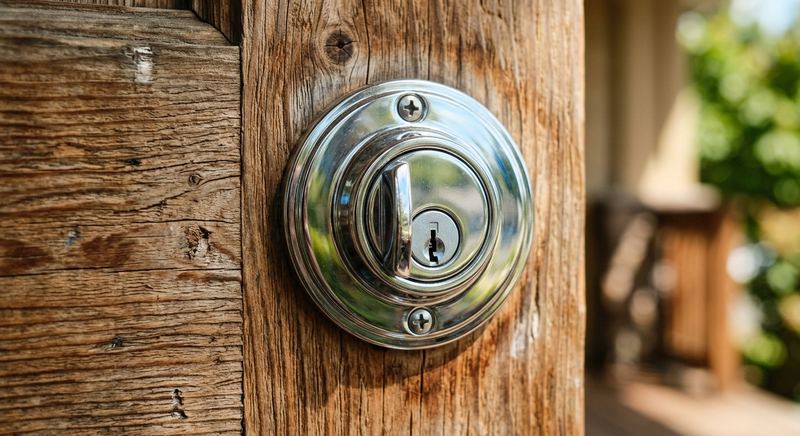
ANSI (American National Standards Institute) and BHMA (Builders Hardware Manufacturers Association) test door locks to establish security grades. The grades measure how much force and how many cycles a lock can withstand.
Tested to 250,000 open/close cycles, a 250-pound single-blow kick test, and a pick-resistance standard. Grade 1 is the highest residential certification. All locksmiths and security professionals recommend Grade 1 on front and back entry doors.
Tested to 150,000 cycles and a 150-pound kick. Acceptable for side entries and interior security doors where risk is lower.
The minimum standard. Most builder-grade locks are Grade 3 or unrated. These are the ones that fail in kick-in tests most frequently — typically because the strike plate, not the lock body, gives way under 100 pounds of force.
The standard residential lock. A key rotates the cylinder, which drives a bolt into the door frame. The pin stack inside the cylinder is what a rekeying changes.
Replaces or overlays the deadbolt mechanism with a keypad, Bluetooth app, Z-Wave, or fingerprint reader.
Medeco, Schlage Primus, Mul-T-Lock, and Abloy use patented keyways and sidebars that resist picking, bumping, and unauthorized key duplication.
An ANSI Grade-1 single-cylinder deadbolt with a reinforced strike plate is the most practical choice for most residential front doors. High-security cylinders (Medeco, Schlage Primus) add pick and bump resistance, but the door frame and strike plate are statistically where most residential break-ins succeed — reinforce those first.
A deadbolt has a solid steel bolt that extends into the door frame and requires a full key rotation to operate — it cannot be slipped with a credit card or shimmed open. A knob lock has a spring-loaded latch that can be forced open with a credit card or shim. Use both: the knob for convenience, the deadbolt for security. Never rely on a knob lock alone for exterior door security.
Not necessarily. Grade-1 rated smart locks meet the same mechanical security standard as traditional Grade-1 deadbolts. The additional risks are: a dead battery locks you out, and software vulnerabilities exist in connected devices. Choose a smart lock with a physical key override and a Grade-1 rating to minimize these risks.
